

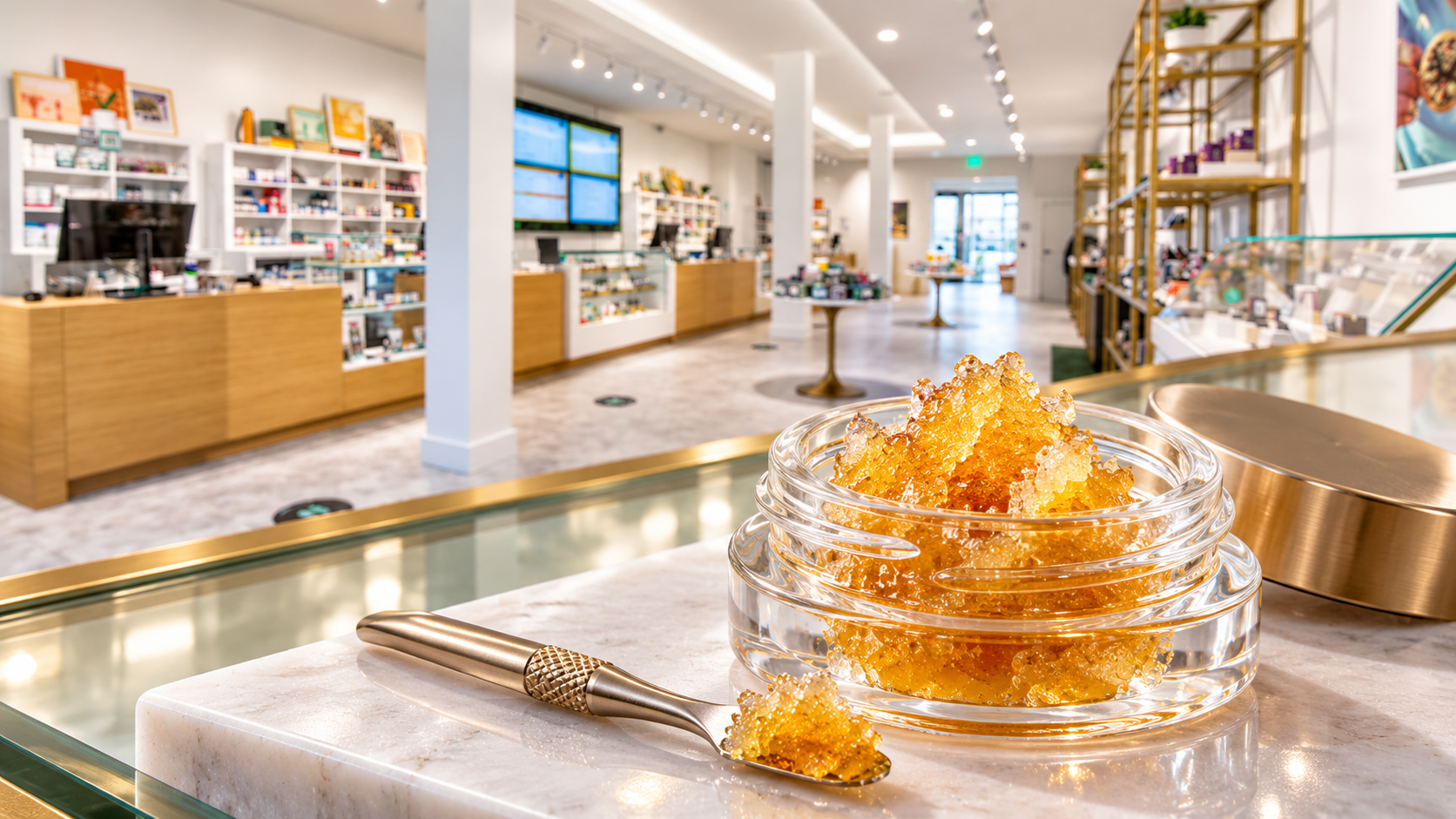
Live resin sugar is a cannabis concentrate made from fresh-frozen cannabis plants. It has a grainy, crystal-like texture that resembles wet sugar, with small cannabinoid crystals surrounded by aromatic, terpene-rich oil.
Unlike concentrates made from dried and cured flower, live resin sugar starts with cannabis frozen shortly after harvest. This helps preserve aromatic compounds that might otherwise be lost during drying.
Its distinctive texture, strong aroma, and concentrated cannabinoids make it a recognizable option among cannabis extracts. Understanding how it's made and how it compares with other concentrates can help you make a more informed choice.
What Is Live Resin Sugar?
Live resin sugar is a type of cannabis extract that combines two characteristics: fresh-frozen starting material and a semi-crystalline texture.
The name explains both:
-
Live resin: Cannabis extracted from freshly harvested plants that were frozen rather than dried and cured.
-
Sugar: The grainy consistency created by small cannabinoid crystals mixed with terpene-rich liquid.
Despite its name, this concentrate contains no table sugar. Its appearance comes from naturally occurring cannabis compounds, particularly THCA crystals.
The texture can range from loose, moist granules to thick, sticky clusters. Colors commonly include pale gold, yellow, and amber.
Regular sugar wax can be made from dried cannabis, while live sugar specifically uses fresh-frozen material. This distinction matters more than appearance alone.
How Is Live Resin Sugar Made?
Commercial production uses controlled extraction and post-processing to separate desirable compounds from cannabis plant material.
1. Fresh Cannabis Is Frozen After Harvest
Instead of drying and curing the harvested flower, producers freeze it shortly after harvesting.
This helps retain volatile terpenes, the compounds responsible for many of cannabis's recognizable aromas.
2. Cannabinoids and Terpenes Are Extracted
Licensed manufacturers commonly use hydrocarbon solvents, such as butane or propane, in specialized extraction equipment.
The process separates cannabinoids and aromatic compounds from the frozen plant material. Manufacturers then remove residual solvents through controlled processing.
3. Small Crystals Develop
During post-extraction processing, THCA can begin forming small crystals within the terpene-rich liquid.
Rather than becoming one solid piece, the material develops a granular consistency.
The resulting concentrate combines crystalline particles and aromatic oil. Crystal size, moisture-like appearance, and thickness can vary between batches.
Because hydrocarbon extraction involves hazardous solvents, production belongs in properly equipped, regulated facilities.
What Does Live Resin Sugar Look, Smell, and Taste Like?
The most recognizable feature of live resin sugar is its texture.
It can resemble damp sand, crystallized honey, or coarse brown sugar. Some varieties look relatively dry, while others have enough terpene-rich liquid to appear glossy and sticky.
Aroma and Flavor
Live resin products are often selected for their aromatic characteristics.
Depending on the cannabis cultivar and extraction process, common flavor and aroma notes include:
-
Citrus: Lemon, orange, or grapefruit
-
Fruity: Berry or tropical fruit
-
Earthy: Herbal, woody, or soil-like notes
-
Pine: Fresh, sharp, resinous aromas
-
Diesel: Pungent, fuel-like characteristics
Terpenes help create these differences. However, a stronger smell does not automatically mean higher quality, greater potency, or more desirable effects.
The final aroma depends on the plant material, extraction conditions, and storage.
Live Resin Sugar vs. Other Cannabis Concentrates
Cannabis concentrate names can describe either an extraction method or a texture. Understanding that difference makes product comparisons easier.
|
Concentrate |
Typical texture |
Main distinction |
|
Live resin sugar |
Grainy, moist crystals |
Small crystals mixed with aromatic oil |
|
Live resin badder |
Smooth and creamy |
Whipped or processed into a softer consistency |
|
Live resin diamonds |
Larger, firmer crystals |
More prominent THCA crystal formation |
|
Live resin sauce |
Thick, syrup-like liquid |
More fluid, terpene-rich consistency |
|
Live rosin |
Varies from creamy to sticky |
Solventless extraction rather than hydrocarbon extraction |
Live Resin Sugar vs. Badder
Both can start with fresh-frozen cannabis and use similar extraction methods.
The main difference is consistency. Sugar retains recognizable small crystals, while badder has a smoother, more uniform texture.
Neither is automatically stronger or more flavorful.
Live Resin Sugar vs. Diamonds
Diamonds typically contain much larger THCA crystals. They may be sold separately or combined with terpene sauce.
Sugar contains smaller crystals distributed throughout the extract, making its texture more granular and scoopable.
For a broader explanation of extraction methods, read Bon Bon's live resin vs. rosin guide.
Is Live Resin Sugar Stronger Than Regular Cannabis?
Live resin sugar can contain substantially more cannabinoids by weight than traditional cannabis flower.
However, its potency is not fixed.
Actual strength depends on the cannabis cultivar, extraction process, cannabinoid concentrations, and individual batch.
THCA is particularly relevant because it converts into intoxicating THC when heated. The CDC explains that concentrates can deliver highly concentrated THC, potentially increasing the risk of unwanted effects.
A higher THC percentage does not necessarily mean a better product.
Terpene composition, individual tolerance, and consumption method also matter. Check the tested cannabinoid information rather than judging strength by texture or appearance.
How Do People Use Live Resin Sugar?
Live resin sugar is commonly sold as a concentrate intended for inhalation using compatible equipment.
Dabbing
Dabbing involves vaporizing a cannabis concentrate with a purpose-built device, such as a dab rig or electronic dab device.
Its granular texture can make sugar relatively easy to handle with a concentrate tool.
Concentrate-Compatible Vaporizers
Some portable devices are designed for cannabis extracts, including sugar.
Not every vaporizer supports this consistency. Standard oil cartridges, for example, are not necessarily designed for loading solid or semi-solid concentrates.
Always follow the device manufacturer's instructions and the product's intended use.
Because concentrates can deliver substantial amounts of THC, inexperienced consumers should be particularly cautious. California's responsible cannabis use guidance recommends starting with low amounts, allowing time to assess effects, and avoiding impaired driving.
What to Look for When Buying Live Resin Sugar
Appearance alone cannot establish concentrate quality. The packaging, tested composition, and production information provide more dependable evidence.
Check the Cannabinoid Label
Review the reported THC, THCA, and other cannabinoid values.
These numbers help explain the product's potential potency and are more useful than assuming every sugar concentrate has similar strength.
Look for Terpene Information
When available, examine the terpene profile to understand the product's aromatic characteristics.
For example, limonene is commonly associated with citrus notes, while pinene contributes pine-like aromas.
Terpene information can guide flavor preferences, but it should not be treated as proof of specific therapeutic effects.
Verify Testing and Packaging
California requires regulated cannabis batches to undergo laboratory testing before sale.
According to the California Department of Cannabis Control, required testing includes cannabinoids, residual solvents, pesticides, heavy metals, and other potential contaminants.
Check that the packaging is properly labeled and sealed. If you have questions about testing, ask the retailer about the batch's Certificate of Analysis.
How Should Live Resin Sugar Be Stored?
Proper storage helps maintain the concentrate's consistency and aromatic characteristics.
Keep live resin sugar:
-
In its original, tightly sealed container
-
Away from direct sunlight and excessive heat
-
Protected from unnecessary exposure to air
-
In a secure place inaccessible to children and pets
Follow the manufacturer's temperature recommendations. Certain products may require cooler storage conditions than others.
A change in texture does not always indicate spoilage, but unusual contamination, damaged packaging, or unexpected odors deserve caution.
Buying Cannabis Concentrates in San Francisco
California permits adults 21 and older to purchase recreational cannabis from licensed retailers. State law generally limits adult possession to eight grams of concentrated cannabis.
Public consumption remains restricted, so consumers should review applicable rules before using cannabis outside a private residence.
For San Francisco shoppers, Bon Bon Cannabis Dispensary is located at 2222 Bush Street, near Japantown and Fillmore Street.
You can explore the Bon Bon extracts menu to compare current concentrate options. Inventory varies, so check the menu rather than assuming a particular type of live resin sugar is available.
Final Thoughts: Is Live Resin Sugar Worth Exploring?
Live resin sugar offers a distinctive combination of fresh-frozen cannabis extraction, small cannabinoid crystals, and terpene-rich texture.
Its appeal lies partly in its aroma and consistency, but no concentrate format guarantees a particular experience.
When comparing products, prioritize verified lab results, cannabinoid content, extraction information, and your own preferences.
If you're exploring live resin sugar or other concentrates in San Francisco, Bon Bon's team can help explain the available formats and product labels so you can make an informed choice.
FAQs
1. Is live resin sugar the same as sugar wax?
Not always. Sugar wax describes a grainy cannabis concentrate texture and can be produced from dried or fresh-frozen material. Live resin sugar specifically uses fresh-frozen cannabis as its starting material.
2. Does live resin sugar contain actual sugar?
No. The word "sugar" describes its crystallized appearance. It does not refer to table sugar or added sweeteners. The small granules primarily consist of concentrated cannabis compounds.
3. Is live resin sugar stronger than live resin badder?
Not necessarily. Both products can have similar cannabinoid concentrations. Their main distinction is texture. Compare their tested THC and cannabinoid values to understand the potency of individual products.
4. Can you put live resin sugar in a vape cartridge?
Not directly into a standard prefilled cartridge. Cartridge oils require a suitable formulation and hardware. Sugar concentrates are generally intended for compatible concentrate devices unless a manufacturer specifies otherwise.
5. How long does live resin sugar stay fresh?
Freshness depends on packaging, storage conditions, and the product itself. Exposure to heat, light, and air can gradually alter aroma and consistency. Follow the manufacturer's storage instructions and any labeled use-by date.